Monday, March 3, 2014

Daniel Boone


        Daniel Boone, born on November 2nd, 1734, was traveling. He was 15 years old and he and his family were moving from Pennsylvania to the Yadkin River in North Carolina. He had a great time because he was very fond of the forest. He also enjoyed places where people hardly ever explore. When they reached the Yadkin River, they began building their cabin.

        When he was older, he joined the British in the French and Indian War. He was mainly a wagon driver. After two years he quit his job and went home in North Carolina. Later, He married a neighbor named Rebecca.

A year after their marriage, a baby boy named James was born.

        When, a friend from the army came to him and invited him on his expedition to Kentucky. It was hard for him to leave his family, but he accepted. When he was there, he and a friend were captured by Indians. Luckily, when the guards were asleep, he and his friend escaped. Daniel stayed in Kentucky for two more years and he finally went home to his family.  

        Years after he had come home, he decided to move to Kentucky. With him, he brought his family and five other neighbor families. Soon, more people began joining him so he founded the settlement of Boonesborough. In 1776, his daughter was captured by the Indians so he had to rescue her. In 1820, he died at the age of 86.

        He was important to history for making many roads to the west of the United States, which no one had ever explored.


Wednesday, February 12, 2014

Massachusetts


          The first people to live in Massachusetts came about 10,000 years ago. They hunted the mammoths and other wild beasts in big groups so that they wouldn’t fail. By 5000 BC the mammoths were extinct. They began hunting the normal animals that we hunt today such as rabbits, deer, and squirrels. They also started growing vegetables. They began to live in small villages too. Between 2000 and 3000 years ago, the Indians, such as the Mohicans, Algonquian, and the Massachusetts tribes, settled into the areas.

          The first Europeans to go near Massachusetts were Vikings in the year 1000. They came because they heard stories about a man that saw the land but didn’t travel to it. They first came to New Found Land and traveled down near Massachusetts. In 1498, an Italian sailor named John Cabot was working for the British and he caught sight of the land. He didn’t go ashore, but he still claimed it for the British.

          In the 1600s, England was forcing people to follow the Church of England. The church was getting corrupt and it began turning to a different religion. If someone didn’t follow the church, they could be punished or even killed. A group of people who didn’t approve of these laws decided to leave England and make a settlement in the New World.
         They traveled on a ship called the May Flower and the Speedwell, but the Speedwell began leaking so the passengers switched over to the Mayflower. It was a harsh trip. It was very cold and they were in a storm a majority of the time. There wasn’t much food expect for salt meat, hard biscuits, and small beans. After about 60 days of traveling, they landed in Massachusetts. They had a chance to settle into and early English settlement but they decided to go somewhere else. They soon founded a town named Plymouth. It was on an abandoned Indian village.

          For 50 years the Pilgrims and the Indians maintained a strong relationship. At first, the winters were harsh for the pilgrims with hardly any food and warmth, but it all changed. An Indian named Samoset came to the village. In English he said to them, “Welcome Englishmen.” He was very helpful to the Pilgrims. He brought them two Indians to help them. With one of the Indians, they made a peace treaty.

          In the fall of the year 1621, the Pilgrims celebrated their arrival in the New World and their harvest so they decided to have a feast. One of the main dishes was turkey. The food lasted for 3 days. They invited some of the Indians too.

          Soon, the pilgrims started to be like the Church of England. They didn’t follow the same religion, but they started to force people to be Christians. They began to punish or banish anyone who didn’t agree with them.

          In the 1700s, they began to trade with the English and soon more English colonies began settling there. By the 1750s, Massachusetts was under British control. Later in 1776, the revolution began and at the end of the war, The 13 colonies became America.

Tuesday, January 28, 2014

American Revolution


The American Revolution took place in the thirteen colonies, which were New Hampshire, New York, Massachusetts, Rhode Island, Connecticut, Pennsylvania, New Jersey, Delaware, Maryland, Virginia, North Carolina, South Carolina, and Georgia. All these colonies were controlled by King George III of the United Kingdom.

The American Revolution was the first revolution during modern times so it inspired many other people around the world to stand up to their bad governments. At the battle of Concord, “The Shot heard Round the World” was fired. The shot wasn’t actually heard round the world. It was the first shot fired in the revolution. No one knows who shot it. It is famous because it started America’s Revolution and lots of people worldwide wanted freedom too and it inspired many other revolutions.
          Many settlers had been coming to America since 1600, but in the 1760s the niceness of living there was changed. England recently had a war with France in which they spent most of their money on buying things for the war. They wanted to regain the money so they plastered some taxes on the colonists for goods like tea, playing cards, and sugar. The colonists thought this wasn’t fair.

          On a day in March 1770, some angry citizens were throwing snowballs at the British troops. Suddenly, one of the officers commanded the soldiers to fire their guns at the citizens. This event was called the Boston Massacre. Five of them died.

          One tax was the tea act. This tax put lots of extra charges on the cost of tea. Many colonists were dissatisfied at the sight of the cost. One night in December, 1773, a group of colonists disguised themselves as Indians. They boarded some British trading boats in the Boston Harbor and dumped the tea into the H2O. This was called the Boston Tea party.

           When it was announced, King George III was significantly angered. He demanded that the parliament make more and greater taxes on the Americans. He also sent more troops to Boston to keep guard so it wouldn’t happen again. The new taxes were called the Intolerable Acts by the Americans because they couldn’t do anything about them.

          In 1774, the first Continental Congress was presented. A Continental Congress was where a group of leaders came together to discuss how to deal with the British. Some spoke of cutting off all trade with the British and some even suggested war.

          In Concord the colonists had hidden supplies in case the British attacked. King George III heard about the supplies and ordered military governor Thomas Gage to find and destroy the supplies. Some people heard about the plan so they told the leaders of the patriots to be ready if they came.

On April 18th, 1775, Dr. Warren called silver smith, Paul Revere, to warn John Hancock about the British. Revere set up a signal at Christ Church. If one lantern was up it meant that they were coming by land and two meant that they were crossing the river. Eventually, Revere spotted the British crossing thee river so he rode to Christ Church to hang the two lanterns. At about midnight, Revere, William Dawes and Prescott warned the minutemen that they were coming. Minutemen were patriots that would be ready to fight the British in a minute.

The men were supposed to warn everybody without being caught by the British, but they were caught. Dawes and Prescott escaped and Revere was let go but they took his horse.

Lieutenant Colonel Francis secretly led the British out of Boston and into Concord to destroy the supplies. The minute men were ready. It was a few dozen minute men against hundreds of British troops. The Patriots were holding old muskets, but the British had big and shiny muskets. John Pitcairn asked the patriots to drop their weapons and go away, but they refused. Then the shooting began. Nobody knows which side started it. The shooting lasted for five minutes. Eight patriots died and ten were injured. Only one British man was injured. This battle started the war.

After the battle, Colonel Smith led the British to Concord. Two hundred fifty patriots led by John Butrick began marching to Concord to defend the supplies, but when they saw the British they retreated because there were too many. The British couldn’t find the supplies because they were moved to the woods nearby. They just found some gunpowder and started a fire in town square with it. A small group of British met the Patriots at North Bridge. The British started destroying the bridge so the patriots wouldn’t cross, but when they started a shot was fired. Three British were killed and several were wounded. The British began running away to Concord.

British were looking for the supplies but they couldn’t find them. They began marching back to Boston but the Americans were waiting for them. They were hiding behind the trees, in the bushes etc. When the British came near the shooting began. The Americans could easily see them because of their red coats. Most of the British were dead and the survivors were relieved to make it back to Boston.

On July 4th, 1776 the Declaration of Independence was written by Thomas Jefferson and was signed. This officially decreed that the United States was independent from Britain. Finally in 1781, The war ended. America won and they were free from the rule of Great Britain.


Monday, December 9, 2013

Lewis and Clark Expedition


          Louisiana was the vast land of about 280,000 square miles to the west of the 13 U.S. states. It possesses parts of today’s states of Montana, North Dakota, South Dakota, Minnesota, Wyoming, Nebraska, Iowa, Colorado, Kansas, Missouri, Oklahoma, Arkansas, and Texas.

 Before the 1800s, the Spanish owned the land. But in 1800, the French emperor, Napoleon Bonaparte seized control of it hoping to establish a brand new, out of the package, empire.

          Americans were worried that Napoleon would take over. Napoleon’s empire was very strong and America had barely won their war against Great Britain. Finally, President Thomas Jefferson decided what to do. His decision was to buy the land.

          In 1803, the land was bought. The price was about 15 million dollars. This would be a very small price for that much land, but during that time one cent was worth 28 of today’s dollars. This purchase was known as the Louisiana Purchase. Thomas didn’t want to just quickly go ahead and make towns and cities in the land because of the hostile Indians. He decided on an expedition. Captain Meriwether Lewis volunteered and Tom chose him. Lewis agreed and brought along with him his companion, Lieutenant William Clark.

          On May 14th, 1804, the expedition began. On August 20th, 1804, Charles Floyd a member of the expedition died from a sickness. Charles was the only man of the 33 men to die.

          During the whole expedition, Lewis and Clark befriended with 24 Indian tribes.

The expedition sometimes had trouble with the tribes that they met such as the Sioux tribe. The expedition was just trying to pass through their territory to get to a different place, but they wouldn’t let them. The Sioux were very warlike, aggressive, and powerful. Soon both sides were starting to come close to fighting.  Once one of Lewis’s and Clark’s horses were stolen and they believed that the Sioux did it. It stayed this way like for a while so Lewis and lark decided to move on.

In the winter of 1804 to 1805, the men built fort Mandan. At that fort they met Toussaint Charbonneau and his wife Sacagawea. They helped as Indian translators for when speaking to other tribes.    

          Before the men and woman passed through the Continental Divide, they split up into two teams because they both wanted to explore different places. Before they met again, one of the hunters thought that maybe that the moving thing in the woods was an elk so he shot. He was wrong. It was actually Lewis. Lewis was injured in the thigh.

          Finally on March 22nd, they finished their goal by reaching the Pacific Ocean. They made all their maps and started to go home. Finally, in 1806, they reached St. Louis and the expedition ended.

Thursday, November 21, 2013

The Purchaser of the Louisiana Purchase


On April 13th, 1743, a boy’s name became Thomas Jefferson because his parents named him that.

His father’s name was Peter Jefferson. Peter was a very rich man, whose property was very vast. He named the property Shadwell. In 1739, Peter married Jane Randolph. 

Thomas had five sisters and four other brothers named from youngest to oldest: Randolph, Anna Scott, Lucy, an unnamed son, Peter Field, Martha, Thomas, Mary, and Jane.

Thomas was a very lively boy. He loved books, literature, and his fiddle1. The property they lived on had many buildings on it such as cabins, stables, and barns. He would often hide in the cabins when he was playing hide and seek or when he wanted to be alone2. On rainy days, he would have a duet with his sister, Jane. In the duet, Tom would play his fiddle while Jane was playing her harpsichord.

By the time Tom was 14, his father died. When he died, Tom became the head of the house.

Thomas studied and took his duties very seriously. Because of his seriously done school work, by the time he was 16 ,he was ready to go to college. His college was the William and Mary College, which was in Williamsburg, Virginia. Tom liked to read and study so he liked college very much. Jefferson was often invited to the governor’s palace because the governor liked people who were smart.

Tom was interested into politics, mainly because Mr. Wythe, a famous lawyer, often came to the governor’s palace to talk about it. Once he finally graduated in 1762, He asked Mr. Wythe to train him to become a lawyer. Tom spent the next five years with Mr. Wythe studying about martial law, Speaking and reading well, studying history, and listening in courts.
One day in 1765, when the revolution was starting to form, Tom was strolling down the street. He was heading to the capitol building and heard angry voices inside. A heavy tax was put on the Americans. Americans weren’t allowed to vote on laws so they were just ordered to pay them. Then Tom’s friend, Patrick Henry stood up and stated that the men in the colonies were free men and that they had the right to vote on laws. Thomas agreed with everything that Patrick said and he later wrote the quote, “The God who gave us life gave us liberty at the same time.”

Thomas wanted his own house. He chose the top of a hill where could see green pastures in every direction. He spent weeks on his drawing board making designs for his future home using ancient Greek and Roman models.

He after met Martha Skelton and got married. The happy family lived in a little cottage while their new home was being built. Later, the mansion was built and it was named it Monticello.

          The English parliament was starting send more taxes to America. Thomas and his friends wanted America to be free from Britain. So in 1774, the first Continental Congress took place in Philadelphia. The representatives decided to make the suggestion of not buying anything that came from England.

Soon, America was starting to prepare for war against England. In a special meeting at the House of Burgesses, Patrick Henry stood up and spoke the famous quote, “Give me liberty or give me death.”  

In 1776, the second Continental Congress took place in Philadelphia. Tom went but didn’t want to go because his wife was under the weather. The ride to Philadelphia took 10 days. When he got there, they were already quarreling about what to do. Finally, they decided to declare their independence against Britain.  


They decided on making a Declaration of independence. Thomas wanted John Adams to do it, but John replied that Tom’s handwriting was 10 times better than his.

Thomas rented a little room to write the declaration in. On July 4th 1776, the 13 states finally declared their independence by signing the declaration. On the same day, Thomas went to a store and bought a doll3 for his daughter, Patsy Jefferson.

Finally in 1781, the Revolutionary war had ended and the Americans won. At Monticello, Martha was getting worse from her sickness. About a year after the war ended, Martha died.

Although Tom liked school, his daughter Patsy did not as much. Thomas had to go to Paris, France to do some ambassador work. Patsy was to go to a school in Annapolis. But soon, Patsy got a letter from her father saying that Patsy was going to Paris with him.

When they arrived, Patsy felt very happy until Tom told her that tomorrow was her first day in a French School.

Americans didn’t come to France that often, so many people were asking Thomas and Patsy questions about America. Those questions were mostly about weird rumors such as, “do monsters roam the streets?”

          In 1796, John Adams was elected as the second president of the U.S.

          In the election of 1800, Adams lost to Thomas Jefferson. Thomas moved into the White House because it is where the president is supposed to live.

          His daughter, Patsy, now with six children, thought that Tom was very lonely. She decided to move into the White House to live.

When Thomas was president, he was trying to decide on what to do with the land to the west of the U.S. The land was called Louisiana. It was ruled by the Spanish until in 1802; Emperor Napoleon of France then took Louisiana from Spain for France.

Thomas became paranoid that Napoleon was going to take the U.S. from him, so he asked an American Ambassador in France to buy Louisiana from him. Napoleon said “yes” for 15 million dollars, which would be about 140 million dollars in today’s dollars.

Thomas wanted some maps of Louisiana. He asked Captain Meriwether Lewis to make an expedition in Louisiana. Lewis went and took with him none other than Lieutenant William Clark. The expedition lasted about two years. When they got back they told Tom about everything that happened. They had visited many Indian tribes to convince them to become citizens of the U.S.

Most of them agreed. The ones that didn’t, Thomas invited to a feast to show that we would be friendly to them.

In 1809, Thomas Jefferson retired to Monticello. Later, he built The University of Virginia. After that in 1826, he died in Monticello.
 1 Cottler, Joseph. Thomas Jefferson. Evanston, Illinois:
          Row, Peterson and Company, 1950.
2Cottler, Joseph. Thomas Jefferson. Evanston, Illinois:
          Row, Peterson and Company, 1950.
3Cottler, Joseph. Thomas Jefferson. Evanston, Illinois:
          Row, Peterson and Company, 1950.
Monday, November 11, 2013

The Continental Navy


                Starting in 1775, during the American Revolution, John Adams decided to help establish a navy for the US. He decided to do it because Britain had the best navy in the world and America didn’t have a navy at all. They named it the Continental Navy.

          On December 22, 1775, Congress chose Esek Hopins to be commander in chief of the brand new Continental Navy. The Alfred, Columbus, Andrew Doria, and the Cabot were the first ships of the navy.

          Before the American flag was made, the Continental Navy’s flag was a flag that had red and white stripes. In front of the stripes was a rattlesnake and the words,” Don’t tread on me.”

The Continental Navy mainly sunk and captured British merchant ships and brought the items to the American army. In this way, the British army didn’t get the items they needed.

          The Continental Navy was a small navy. It only had about 27 ships against the 200 British ships. But it was a strong navy. Only 11 of the 27 ships were sunk or captured, but 200 British merchant ships were either sunk or captured.                                            

Thursday, November 7, 2013

Mr. Sailor, John Paul Jones


          In the year of 1747, John Paul Jones was born in in Scotland. John had an older sister named Olag and had a younger sister and brother named Edmund and Emilia. His parents’ names were John Paul and Jean

          As a child he was fascinated with the ships that sail the sea and he wanted to become a sailor. At the age of 12, his father, who was a gardener, allowed him to sail on a merchant ship named Friendship.

          The captain’s name was John Younger. John Younger traded with Virginia, which at the time was owned by England.

          Jones was a ship’s boy, who is a young boy who works on the ship. He had many jobs that he didn’t like that much such as scrubbing the decks and helping the cook. He also cleaned the captain’s cabin and ran errands. He also had other jobs that he enjoyed, such as cleaning the guns and several time he steered the big wheel, which navigated the ship.

           When the ship docked, Jones visited his brother, who lived in America. In the next few years, Jones visited America more often because it was his favorite country.

          In a couple of years, John Younger quit the company so John Paul lost his job. He was then appointed as an officer of the British Navy. He then thought that he wouldn’t be successful and became an actor, but he didn’t like that either. He decided to work on a slave boat. He hated the job because he hated to see the suffering of the slaves.

           He then decided to go back to Scotland on a ship named John. He had a weird voyage. The captain died of fever so John Paul became the captain of the ship because he was most likely to bring them to Scotland. Once he got home, the crew was thankful.

          On one of his voyages, John noticed a man sleeping while he was supposed to be working. John ordered him to get whipped because at the time it was the thing that you’re supposed to do when sailors weren’t working. That sailor later joined a different crew and died of the same fever as the captain had.

The sailors on John’s ship heard what happened and made rumors that he died because of the whipping. The crew became mutinous. All the loyal people that John could trust were sick.

The leader of the rebellious crew held a big club and started charging at John. John drew his sword in defense ,although he didn’t want to kill him. John accidentally killed him. 

After this happened, he decided to give up his job and left to America.

America was beginning to rebel against England. America needed a navy because England had the best navy in the world. John was one of the first captains in the American Navy. He  suggested many good changes to the navy.

John’s ship was a little ship called the Alfred. It was not very good for open battles.

He was a great captain. He helped bring ammunition to the American army and sunk or captured many British merchant ships which were bringing helpful items to the British army. Later, he was given command of the Ranger.       

Later in 1778, he docked near the shore close to Britain in order to set fire to many ships. He planned to leave by midnight by rowboat but since the tides were rough, he didnt arrive until morning. When they landed, they first raided a fort and made the guns in the fort not work. Next, they burnt down the ships and came back to their escape boats and escaped.  When the war ended, Jones joined the Russian Navy. He died in Paris in 1791.

Monday, November 4, 2013

Johnny Adams


          In 1735, John Adams was born into the Adams family.  His parents’ names were Susanna and John Adams. He had two brothers named Peter and Elihu Adams.

          When he was 16 years old ,he started going to Harvard University. Four years later, he graduated from Harvard in 1755. He became a school teacher. He thought it was boring and so became a lawyer.

          When he was 28 years old, he got married to Abigail Adams.  

          John was sent to the first and second Continental Congress where he nominated George Washington to be Commander in Chief of the American army. From 1789 to 1807, he was President Washington’s vice president.

          From 1797 to 1801, John Adams was the second president of the United States. During his presidency, he made many hard decisions. In fact, thanks to John Adams, America stayed at peace with France.

          In the election of 1800, John lost to Thomas Jefferson. In 1801, John left the White House and went to live in Quincy, Massachusetts. On July 4th, 1826, John Adams died at Quincy.

Friday, November 1, 2013

Abigail the Adams


In 1744, Abigale Adams was born in Weymouth, Massachusetts.  She had 3 siblings: two sisters named Elizabeth and Mary, and one brother named William. Abigail’s parents were named William and Elizabeth Smith.

Like most girls at the time, she didn’t go to school. Her dad was an owner of a library so she taught herself history, language arts and literature.

In 1764, she married John Adams, who later became the second president. She became known as “The First Lady”, because she was the first lady to live in the white house.  She knew much about politics so John Adams used Abigail as his advisor.

On July 14th, 1765, Abigail Adams had her first child. It was a girl. They named her Abigail Adams, too. At the time, people would call their children after their own names more than today. She had five children. In order from oldest to youngest it was Abigail, John Quincy, who became the sixth president, Susana, who died in infancy, and Thomas Adams.

In the revolution, John helped govern America, so he couldn’t be at home. While John was helping govern, Abigail had to stay home to take care of the kids. John needed her help, so they would often write letters to each other about politics and such. 

In the election of 1800, John Adams lost to his rival, Thomas Jefferson. When they lost, they had to leave the White House. On October 28th, 1818, Abigail Adams died in Quincy, Massachusetts.  


Monday, October 28, 2013

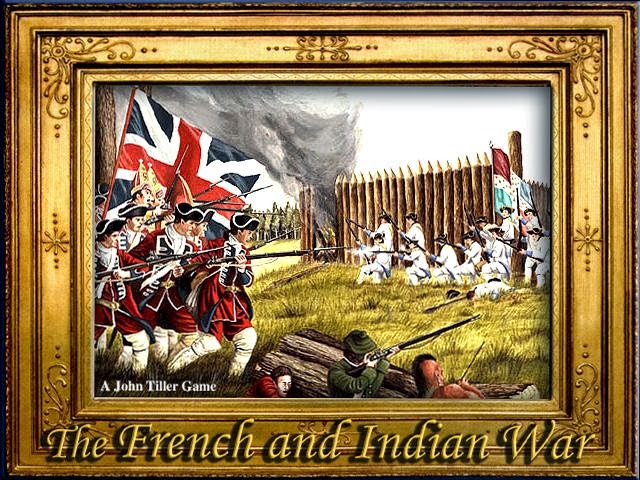
The French and Indian War


          From 1754 to 1763, the French and Indian War raged. It was caused by the French and Indians claiming the Ohio valley, which the English claimed, too. In Europe, the war was called the Seven Years War.

           In the war, the Indians allied with the French and England fought with the American colonists, who were English at the time.

          When it began, the English had to learn how the French fought. The French fought in the trees and took cover behind something. The English fought right in the open. For example, in 1775, General Braddock was sent to a fort along with a lot of English troops. While they were marching, in the trees were French and Indians waiting for The English. When the English came in sight, they opened fire. The British couldn’t see them but the French could see the British. This event caused Braddock and the English troops to lose their lives, but George Washington and a few others survived.
General Braddock

          Like in the Revolution, at first the English weren’t doing very well in the starting battles. Many big casualties happened to the English. One of the biggest was the battle of Fort McHenry, which ended with a massacre where Indians killed all the remaining English.

          In 1758, the luck for the English flipped and the Indians, who were allied with the French, joined the British. The French got frustrated and surrendered in 1763.

Friday, October 25, 2013

Mr. George Washington


          In February 22nd, 1732, George Washington was born in Virginia. He was born in an English family because at the time there was no United States. George had three brothers and one sister. His family was very wealthy. His dad even owned 10,000 acres.

George was a strong man. Once he was watching a wrestling championship and somebody won. When the person won, George challenged the champion and George defeated him.

          Washington wanted to fight in the army. Once he decided to join the English navy, but thankfully he decided not to do so. In 1754, he joined the English in the French and Indian War. This war was caused by the French and Indians claiming the Ohio Valley and The English wanted to take it.  In 1758 the war stopped. In the next year he married Martha Washington.

          George didn’t like America being ruled by the English. The English put high taxes on Americans and gave them less freedom. The Americans wanted freedom. So in 1775 George Washington became a commander of the American army. In 1776 the revolution began. The American didn’t do well in the war, at first. The Americans weren’t good at fighting. They were fighting against the strongest army in the world at the time. 

          The Americans thought they wouldn’t win. They were losing battle after battle. Washington wanted to encourage them. So on the night of December 24th, George and the army had a plan. They planned to cross the Delaware River, march to Trenton and capture the Hessians while they’re celebrating Christmas. Hessians were Germans fighting with the English.

          Soon enough, the plan took place. In December 25th, 1776, they crossed the Delaware and marched to Trenton. The Hessians were celebrating Christmas. The commander of the army was named Rall. Rall really liked playing cards and drinking. While the American army was marching to Trenton, he was just playing cards.  While he was playing, he was handed a note. The note actually said to watch out for George but he was having too much fun so he didn’t even read the note. Sure enough, the next day, all the 500 hessians were captured by the Americans. After this, there was more hope of winning the war.

          In 1783 the French joined the Americans and the British surrendered. America won the war.

          In 1789, George was elected as our first president. Everybody thought he was going to be a king. When George was called king, he got mad and said that he was not a king, he was a president. On December 14th, 1799, he died at his house.


Monday, October 21, 2013

Franklins useful inventions


                                               Bifocals

        Franklin invented bifocals in 1784. Bifocals are glasses with an upper and lower half. The upper half is for distance and the lower half is for reading. They are mainly made for people with presbyopia.


Electricity

Of course, Benjamin didn’t invent electricity. He just discovered that lightning was electricity. One day in a thunder storm, he flew a kite with metal attached to it. He could not see it in the storm, but lightning struck the metal. He gave up but then he noticed that the strings on the rope were standing up. And to prove that he touched the electrified metal with another metal and it created a spark.

Lightning rod

          Ben learned how destructive lightning can be, so he he set about to protect houses from lightning strikes. He invented the lightning rod. The lightning rod is a metal rod put at the top of a house to protect it from burning down and to protect the people from electrocution. Connected to the bottom of the rod is a wire that goes from the rod down the house and harmlessly into the ground.
___________________________________________________
Franklin Stove

          In colonial America, homes were warmed by fire places instead of heaters. Those fireplaces went out quickly and created a lot of smoke. Then Franklin invented the Franklin stove. The Franklin stove was a fireplace that was set in the middle of the room instead of the wall. It was made of iron and created less smoke. Its iron walls absorb the heat and stay warm for a long time after the fire went out.


_____________________________________
Swim Fins

          At the young age of 11, Benjamin Franklin created swim fins that go on your hands. They made him go faster, but he was not satisfied with them, because the fins caused his hands to get exhausted.

Armonica

          The armonica is an instrument named after the word, harmony. It has 37 bowls standing vertically. When the rims of the bowls are touched, it will make a musical sound.
___________________________________________

Odometer

          Although odometers were invented in ancient times, Ben made his own version of them. He was always curious of how far he travels on land, so he created the device to measure the distance he traveled.

Long Arm

          Benjamin loved books, but getting books on high shelves was a challenge. In 1786, he created the long arm. It is just a wooden pole with a mechanical grasping hand at the end.
_________________________________________________________________________
          Benjamin Franklin was a great scientist and inventor. He cared for the people and keeping them safe. Some our newer inventions even come from his work.

Friday, October 18, 2013

Benjamin Franklin -the Sciencey and Printy Man


          In January 17, 1706, Benjamin Franklin was born in Boston. In Benjamin’s family there were 17 kids! Ben was the third youngest because he had two little sisters.

Benjamin loved books. Back then there were not any public schools or text books, so he educated himself by reading books.

          In 1718, he began looking for a job. At first, he wanted to become a cutler. His parents wanted his cousin to teach him, but he wanted a high price that the Franklins couldn’t afford. Then he, became a printer with his brother James. Ben loved printing but not with James. James would always beat Ben and abuse him without cause. When he was 17, he decided to leave his job and find a job at New York.

          There was not many good jobs in New York. At one printing shop, he was told that there were good jobs in Philadelphia so he went there. In Philadelphia, he was very hungry so he bought three giant loafs of bread for three pennies. At that time money was worth more. For example, a penny back then could buy the same as 28 dollars today!

          While he was walking down a street eating the bread, a woman named Deborah laughed at him because he looked so goofy. Later, Benjamin married Deborah and had some kids. Ben was strolling toward a Quaker meeting house. Benjamin was a Quaker. During the meeting, he didn’t pay much attention because he was sleeping.

          Benjamin found a printing shop to work at and he stayed at a boarding house which was owned by the father of Deborah. Ben became the greatest person in Philadelphia. For 25 years he wrote an almanac once a year called “Poor Richard’s Almanac”. He also wrote a lot of other books and articles.

          In 1757, he came back to Boston and then went to London, England, to start a printing shop or maybe start a newspaper.

          Around 1780, he started helping the American Revolution. He also became an ambassador to France and helped to convince France to join America’s side in the Revolution. When he was about eighty, he signed the constitution.  In April 1790, now 84, years old, he died in Philadelphia.  

          Benjamin Franklin was a great man. He was a good inventor, scientist, and printer man. He made some sayings such as “A penny saved is a penny earned” and “Early to sleep and early to rise makes a person healthy, wealthy and wise.” Even today, we use his inventions and sayings.